You built the business on a vision only you could see at first. Now the team is bigger, the work is handed off, and AI writes more of the first drafts. Then the content starts to sound like everyone else’s.
That’s not a talent problem, and it’s not an AI problem.
AI isn’t the problem. A missing brand foundation is.
I’ve seen this from both sides. I built a studio from scratch and grew it to 16 people. Later, I led the design team at Liquidity Services that cut project turnaround from 17 days to 2 (read the case study). In the past year, the same approach took work from weeks to days across three brands.
Here are the five steps:
- Define your brand foundation
- Write brand guidelines your team and AI can follow
- Build one design system every team shares
- Turn your guidelines into on-brand templates
- Keep designers in charge of brand governance
Why AI content sounds like everyone else’s
AI knows only what you tell it. With little direction, it guesses, and the guess fits any brand. The feed fills with AI slop (generic content made to fill a calendar, not to say something).
Content that adds nothing hurts your brand. Before you post, ask:
- Does this look and sound like me?
- Does it give my audience real value?
- Would they stop scrolling to read, click, or share it?
- Am I posting because it’s worth it, or because I feel I have to?
Step 1: Define your brand foundation before anyone publishes
This step matters most. Every other step builds on it.
The mistake
The vision lives in your head. You know what you mean, so you assume your team does too.
I learned this growing my own studio to 16 people. Handing off work meant helping others understand what I knew in my head, and read it the same way. When it wasn’t documented, the message got watered down.
The fix
Write down your identity, your story, and your audience before you publish. If it isn’t written down, your team and your AI tools are guessing.
Step 2: Write brand guidelines your team and AI can follow
The mistake
Handing over a logo and a style guide and calling it done. AI can take both, but without a clear brand story it can’t produce work that fits.
The fix
Set your archetype (the personality your brand plays), tone, and writing style. List what to say, what not to say, and how. Keep it short and clear. The same guidelines should work for a new hire and an AI tool.
Step 3: Build one design system every team shares
The mistake
Every team builds its own version. At Liquidity Services, capable teams were solving the same problem eight times over, once per brand.
The fix
Capture your look, feel, and components in one design system (a shared library of approved parts: components, typography, colors, logo, and imagery). Share it across teams.
Proof: In the past year, I built brand systems for three brands with a dev team. With a component library and clear instructions, the team used generative AI to build what it needed without a designer on every page. Work that took weeks now takes a couple of days on average.
Step 4: Turn your guidelines into on-brand templates
The mistake
Waiting for more people to fix a broken process. After COVID, my corporate team went remote and lost a big part of its staff. Without the people, I had to build systems that streamlined our work. Before I hired anyone new, I made sure those systems worked.
The fix
Feed AI your full brand identity and generate templates from it. Export them to Canva as editable files so teams can make their own changes.
Proof: In 2021, before generative AI took off, my design team built brand kits and templates by hand and made them editable in Canva. Teams made their own changes, then tagged design. A designer needed two hours or less to check and approve. Turnaround went from 17 days to 2. Generative AI would have saved us even more time building the templates.
Step 5: Keep designers in charge of brand governance
The mistake
Letting AI output go straight to your audience, or burying designers in small edits.
The fix
Teams build their own work. Designers review it. That review step is brand governance (the checks that keep every piece on brand).
AI also needs to learn design best practices. That’s where your design team comes in: they track what works as tech changes, learn the audience, and refine the designs. With less production on their plate, they have more time to talk, collaborate, and build new ideas.
Canva still handles the polish. Bring in editable templates from AI, refine them, and share them with the team, so no one burns AI credits on small edits and revisions.
One ad, three versions
Here is one sample ad, a ginger cat for sale, in three versions. This is a test, not client work. It was built on minimum guidelines, not a refined brand.
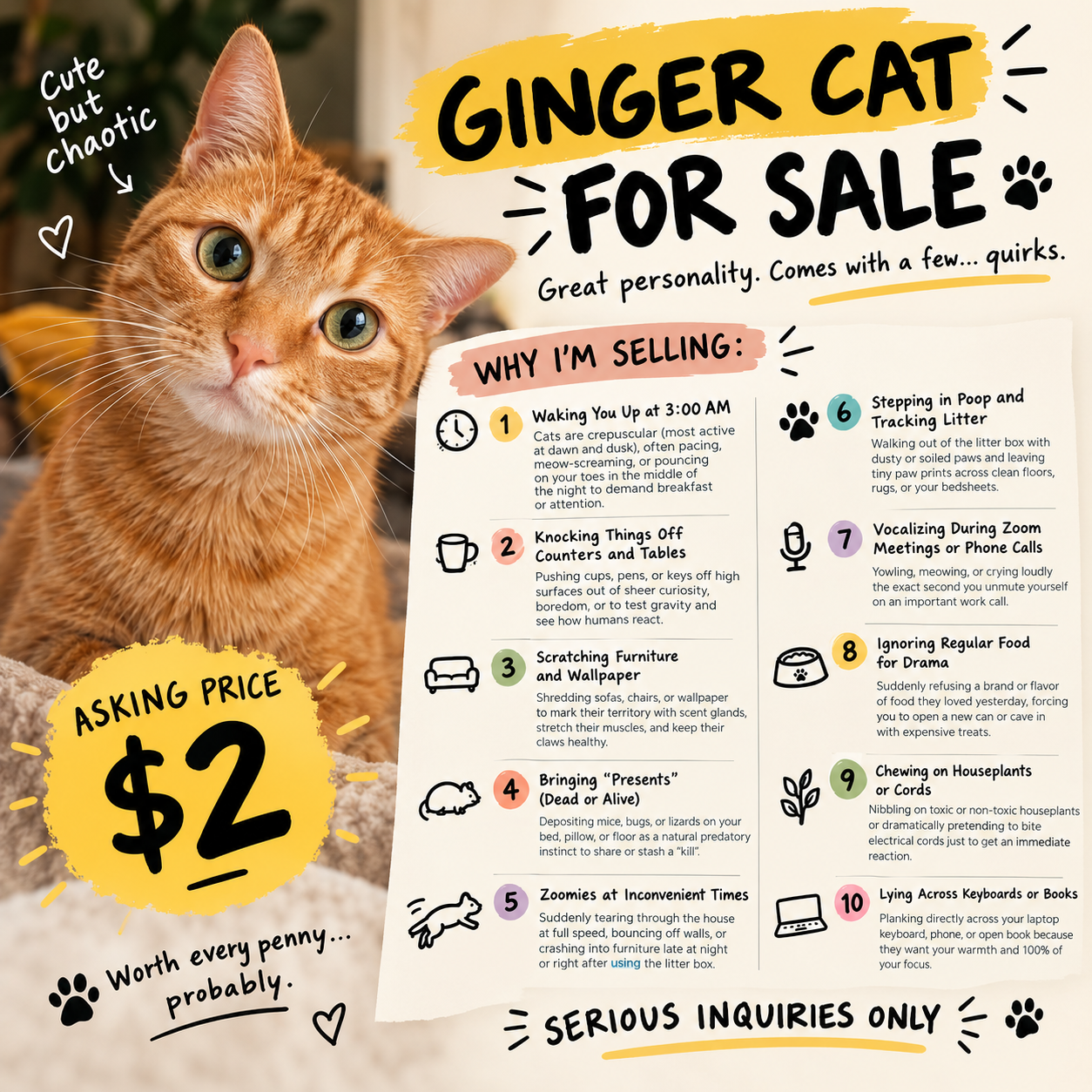
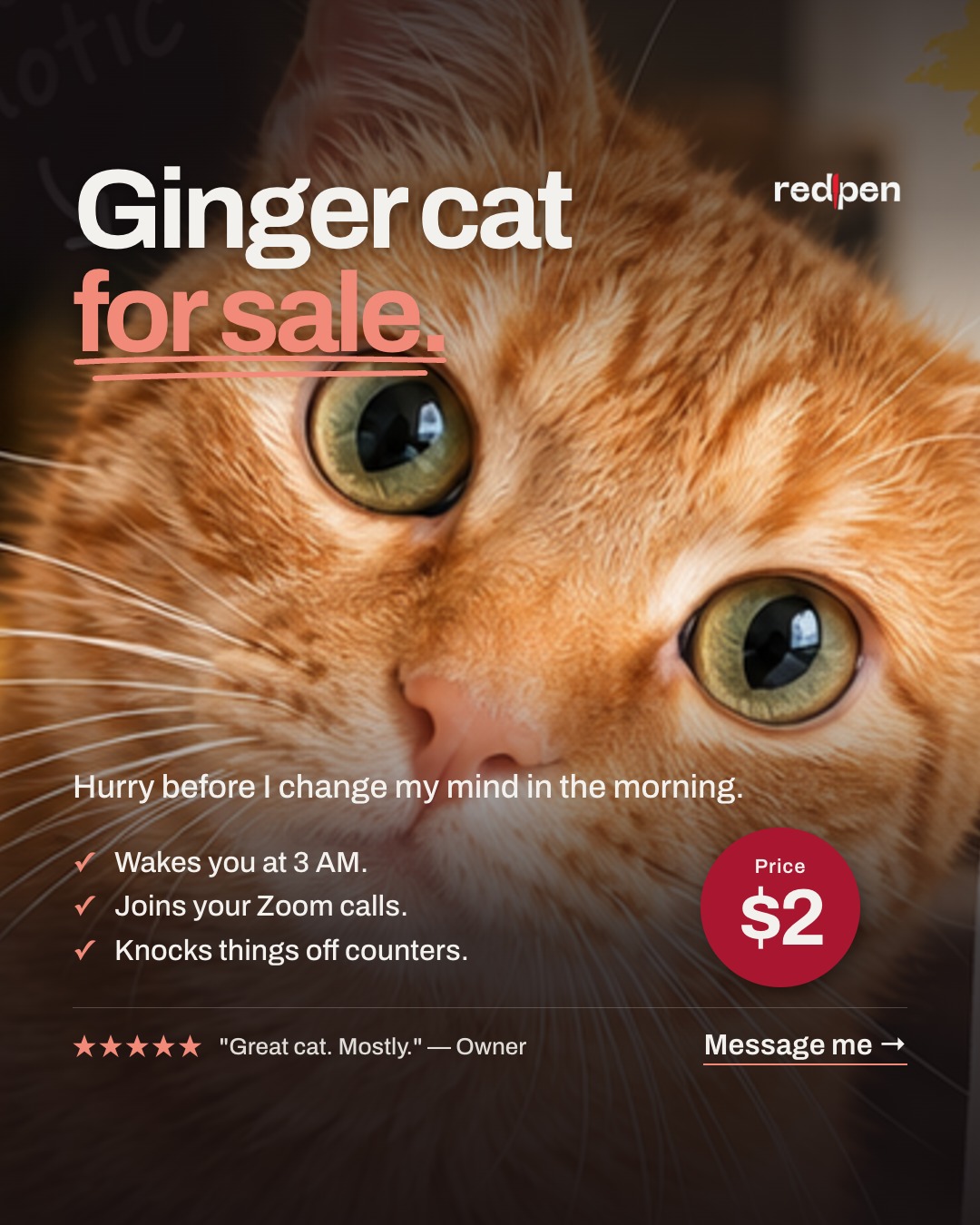
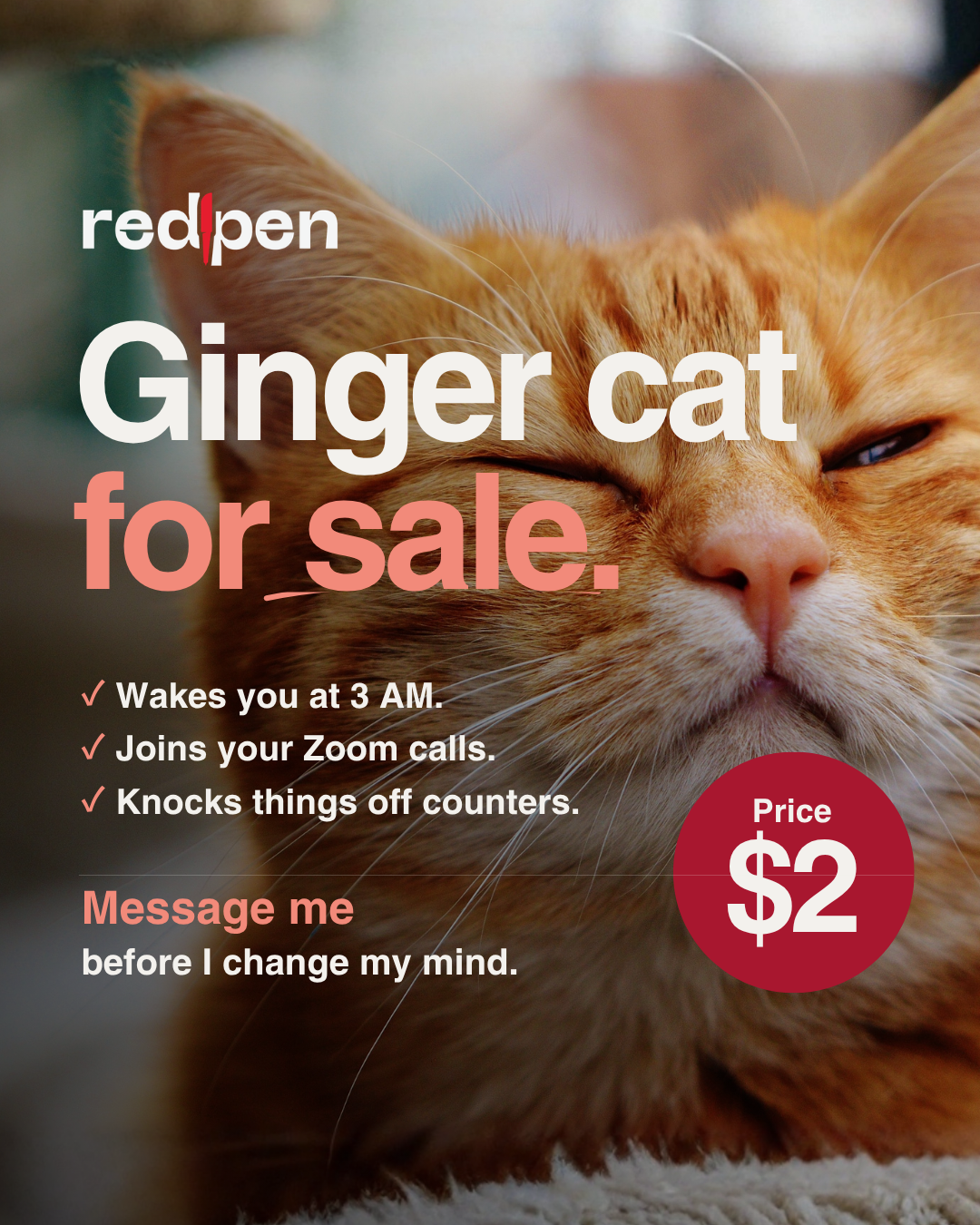
Each round taught us more, and the output got closer. Start with a minimum viable product (MVP) you can test. Expect a lot of human input at first, and don’t expect 100 percent on day one. You learn what works and polish as you go.
Three doubts, answered
- “I hired help and it didn’t work.” Help without a foundation can’t fix a message you never defined.
- “I like my AI content.” Looks good to you isn’t the test. Does your audience connect? What do your metrics say?
- “Will AI replace my team?” No. It frees them for the ideas they never have time for.Without design guidance, AI output gets busy and wordy. Your team knows what makes design work. AI doesn’t, until they teach it.Five hours of work becomes 30 minutes. Use that time to stay human with your audience, not more artificial.
The bottom line
It doesn’t matter if your team is big or small. You need the right systems in place.
Teach AI who you are, or it fills the gap with a guess. Start with the foundation. Then AI can help your team create content that grows the brand and still connects with people.